
Purple Tea Acids and Bases
Grades 6–8, 9–12 · 30 min · by Peter Bohacek · Updated Oct 8, 2026
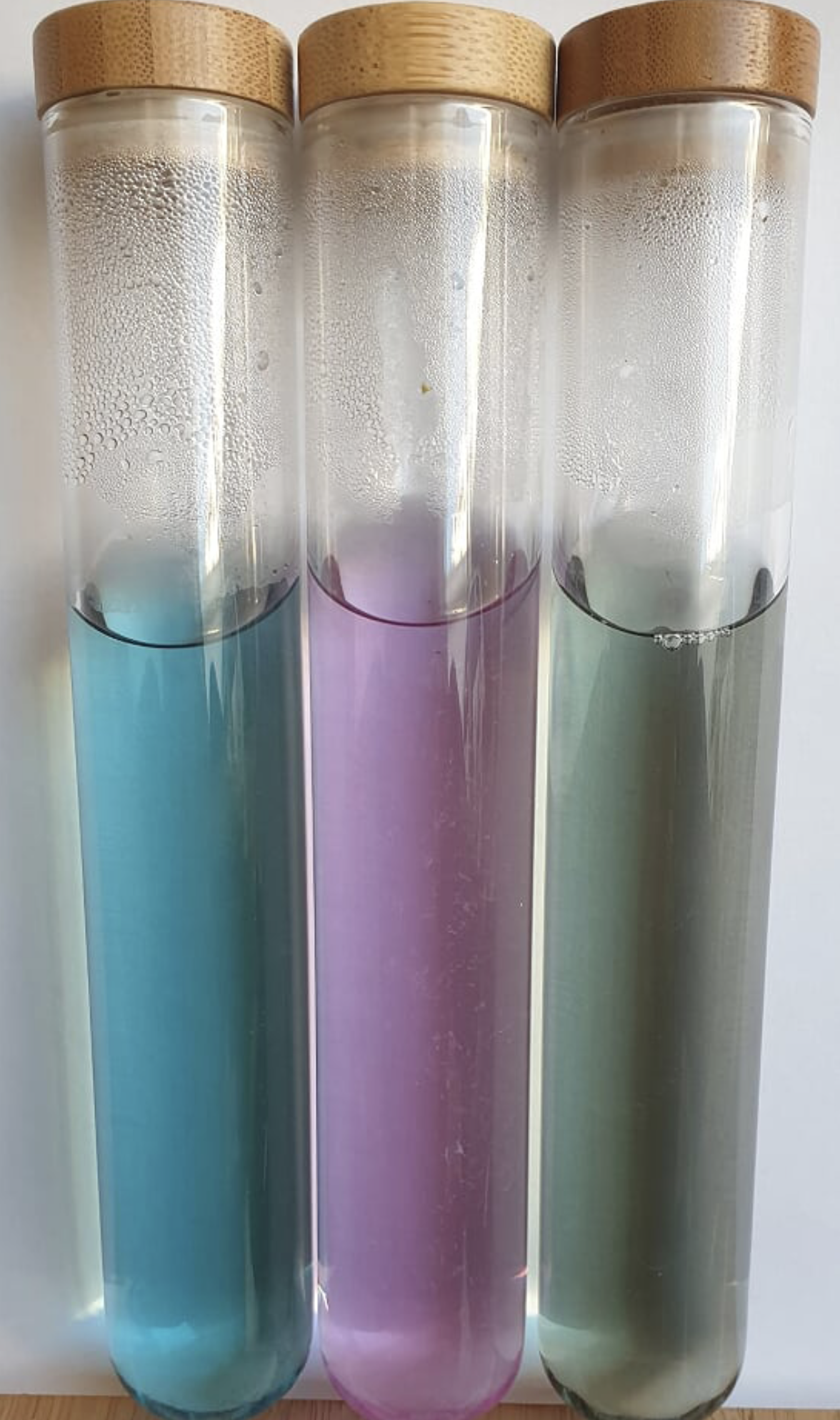
This activity is a quick introduction to identifying acids and bases using blue butterfly pea flower tea as a pH indicator, drawing particle diagrams, and an introduction to reversible reactions and equilibrium. Blue pea flower tea is in expensive, non-toxic, and easy to use.
Coming soon: activities based on using purple pea flower tea as an acid base indicator
Introduction to reversible reactions
Respiration
Introduction to acids and bases (partially complete below)
Learning goals
Students will be able to categorize substances as either acidic, basic, or neutral.
Students will draw particle diagrams of acidic and basic solutions.
Students will devise a method to 'neutralize' an acid or base, and draw a particle diagram showing why it worked.
Equipment needed
Blue pea flower tea
Hot water and heat resistant container to brew tea
Test tubes or other small containers for testing. Small containers work best, either clear or white.
Dropper or small straws to add small amounts of liquids to the tea
Acidic substances:
lemon or other citrus juice
non-diet cola drinks
citric acid powder dissolved in water
Basic substances:
baking soda (sodium bicarbonate) dissolved in water
household ammonia
Adapted from https://scienceinschool.org/wp-content/uploads/2021/03/Issue52_TeaChemistry.pdf
Free for every teacher
Get the full activity
Create a free account to see the step-by-step instructions, handouts, and assessment ideas.
Create a free accountAlready have an account? Sign in
Feedback
Sign in to rate this activity.
No comments yet. Taught this activity? Share how it went for your students.
Sign in to leave a comment.