
Total Eclipse! How does the moon cover the sun so exactly?
Grades 6–8, 9–12 · 40 min · by Peter Bohacek · Updated Oct 12, 2026
The diameter of the sun is almost 400 times larger than the diameter of the moon. But when the moon crosses between earth and sun, we can see a total eclipse where the moon appears to cover the sun almost exactly.
Why can this happen?
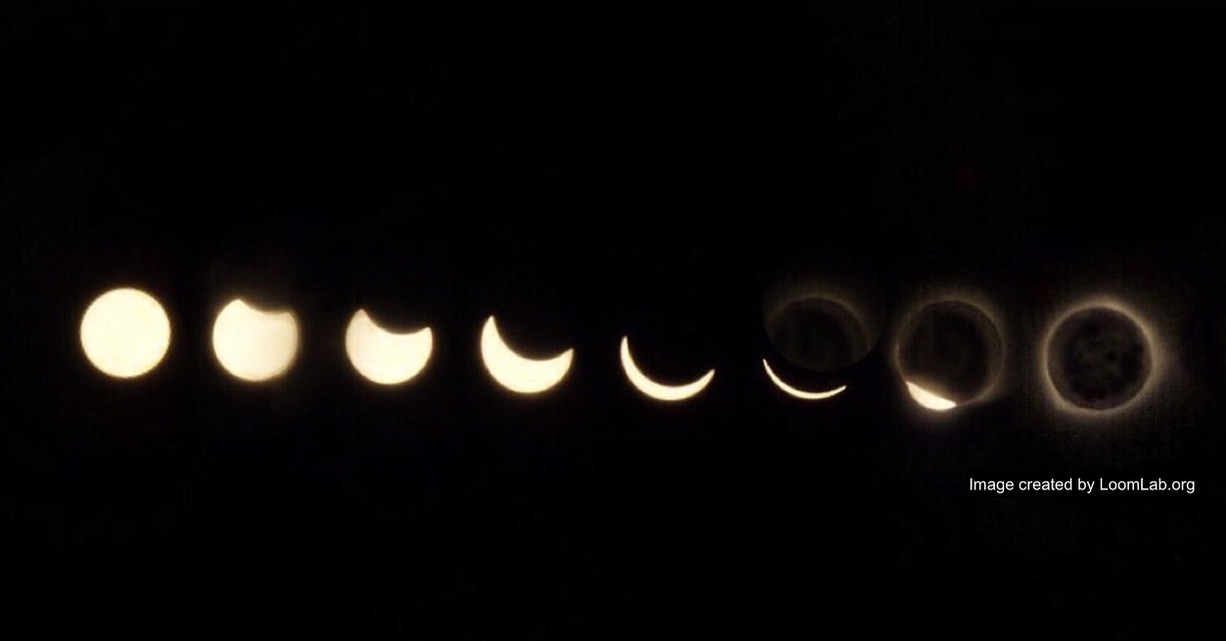
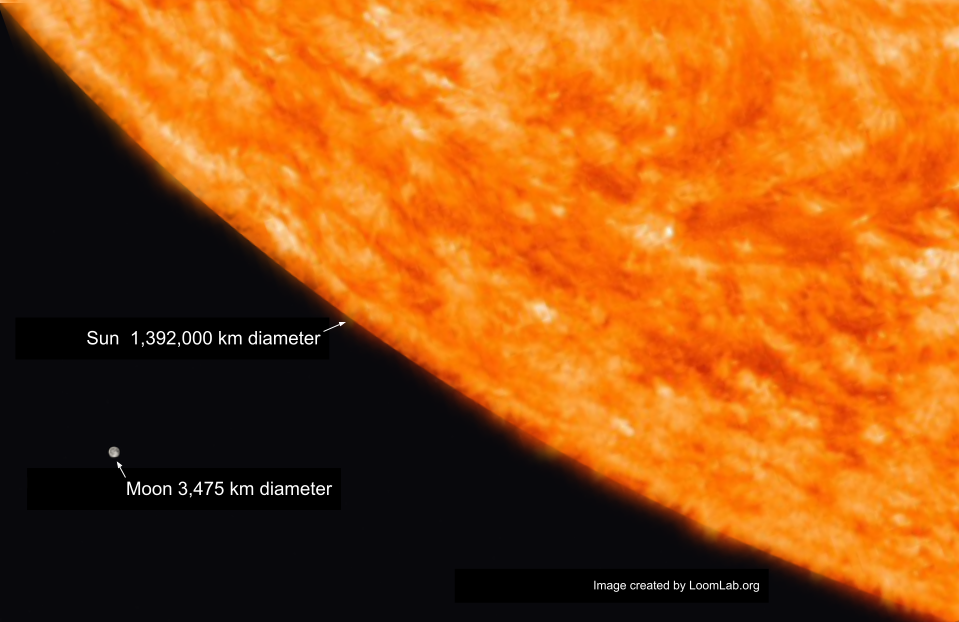
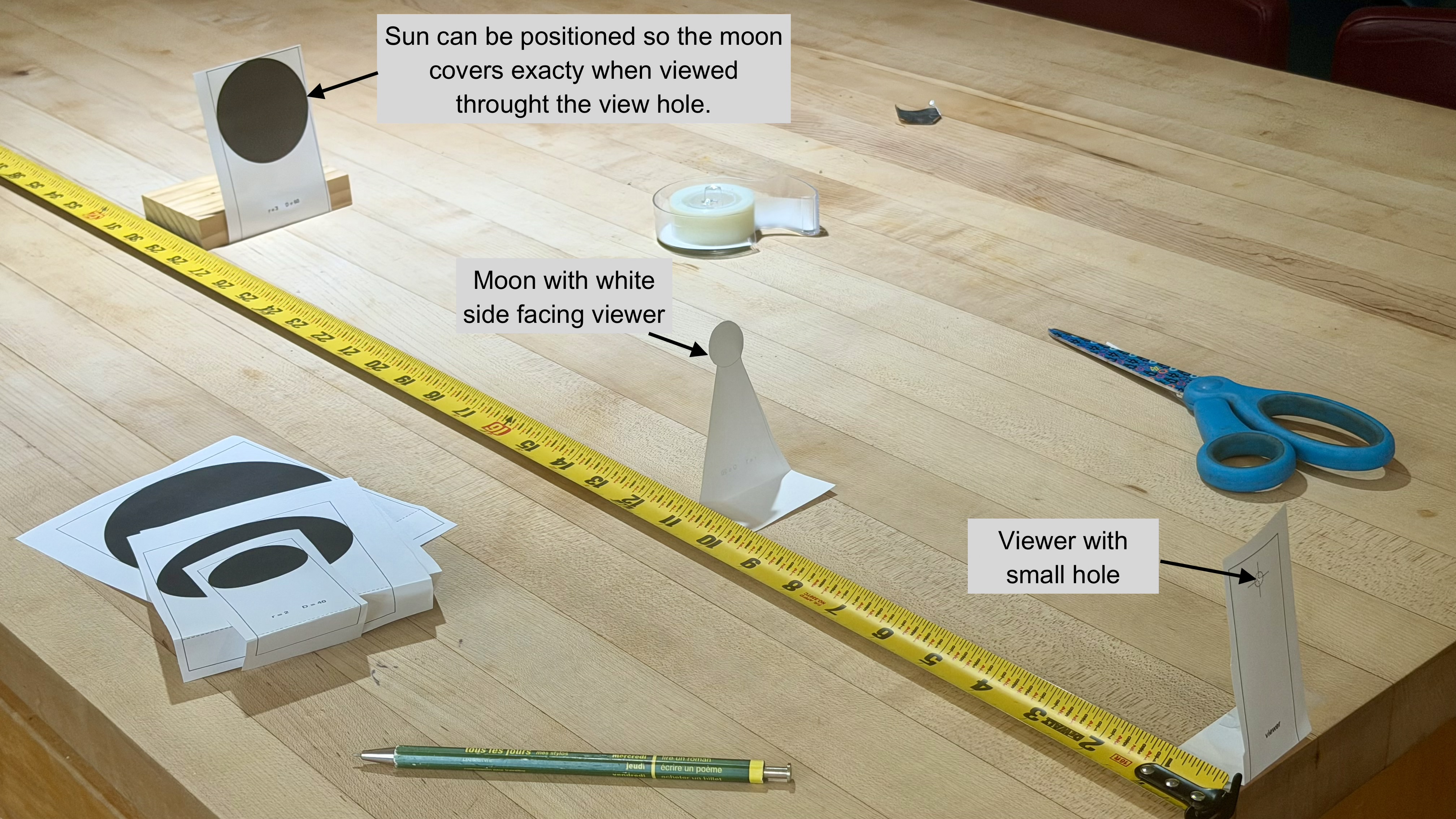
This hands-on activity allows students to explore eclipses and how size and distance play a role in what we see on the earth's surface during an eclipse. Students use paper models of the moon and sun to determine the relationship between the sizes of a moon and sun, and their distance from a planet in order to cause an eclipse. Cutting paper, setting the up the viewing, and adjusting to create a perfect eclipse all result in a beautiful data set for students to admire and learn from.
Learning goals
Students will understand the relative size of objects in our solar system, that the sun is much larger than the moon, but also much farther form earth.
Students will be able to determine if a planet-moon-sun system will produce total eclipses.
Students will be able to 'design a moon' to create a total eclipse for viewers on a planet.
Equipment needed
Print-out of the moon and suns (from the files below)
Scissors
Tape
Measuring device such as a meter stick or tape measure
adopted from an activity by Frank Noschese https://noschese180.wordpress.com/2013/05/07/day-146-size-distance-and-eclipses/
Free for every teacher
Get the full activity
Create a free account to see the step-by-step instructions, handouts, and assessment ideas.
Create a free accountAlready have an account? Sign in
Feedback
Sign in to rate this activity.
No comments yet. Taught this activity? Share how it went for your students.
Sign in to leave a comment.